Realms
Realms are organizational containers in FLAME Hub that group identity providers, robots, users, roles, and nodes. They are managed through Authup and enforced across all Hub services.
Overview
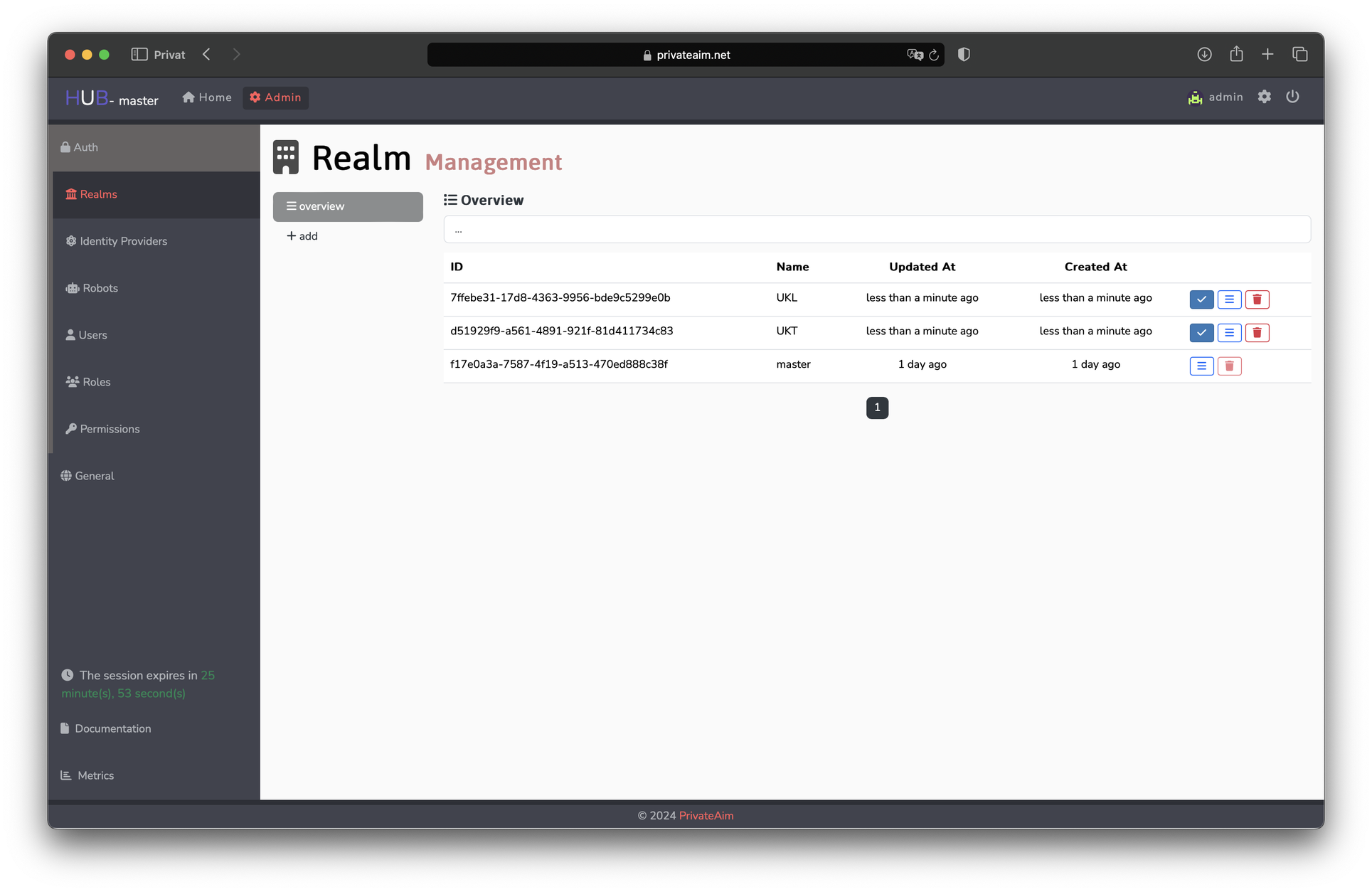
Each realm is an isolated organizational unit. Resources created within a realm (projects, analyses, nodes) are scoped to that realm unless accessed by a master realm administrator.
- The master realm has global access — its members can manage all resources across realms
- Non-master realm users can only access resources within their own realm
Managing Realms
Creating a Realm
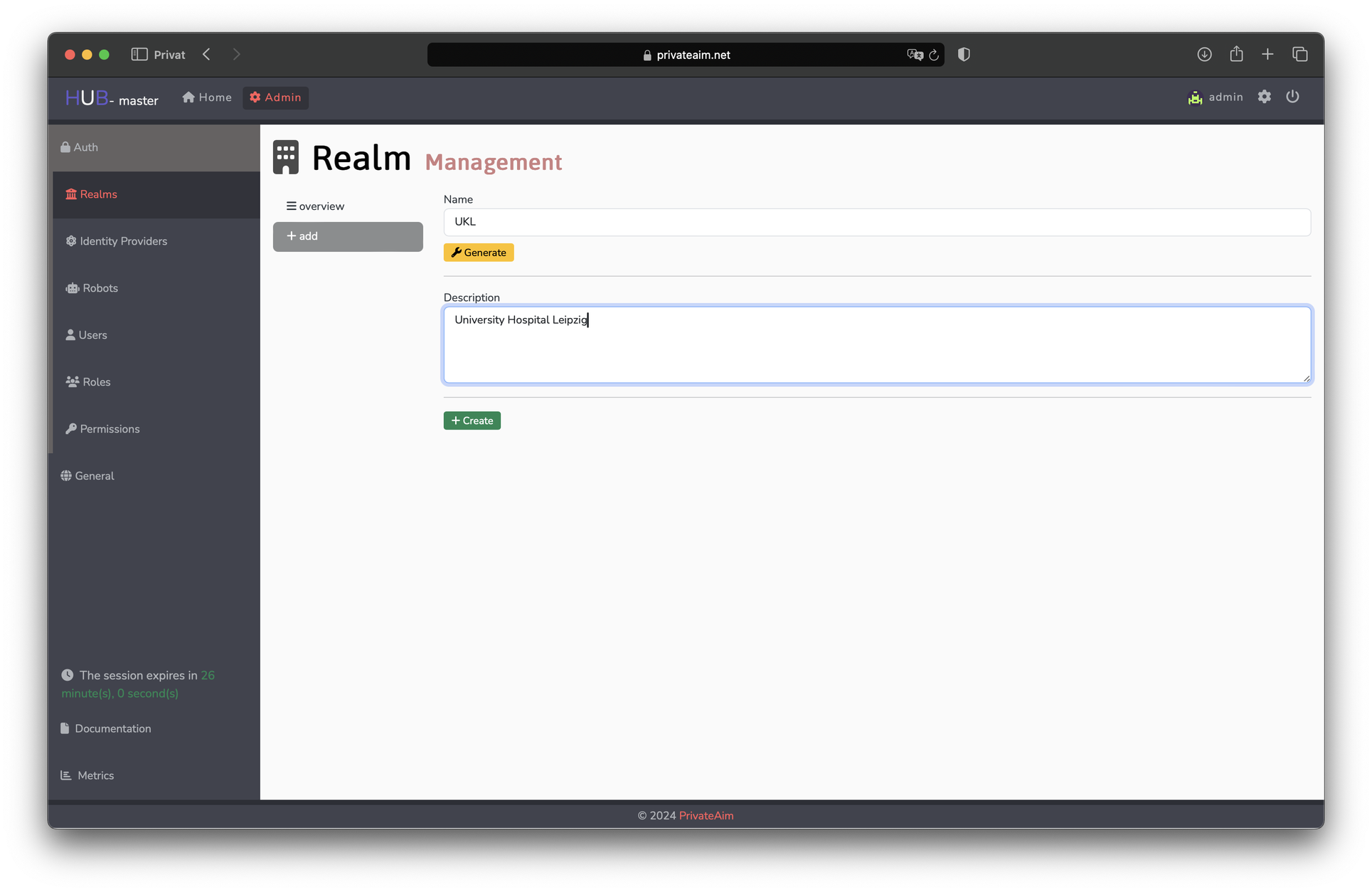
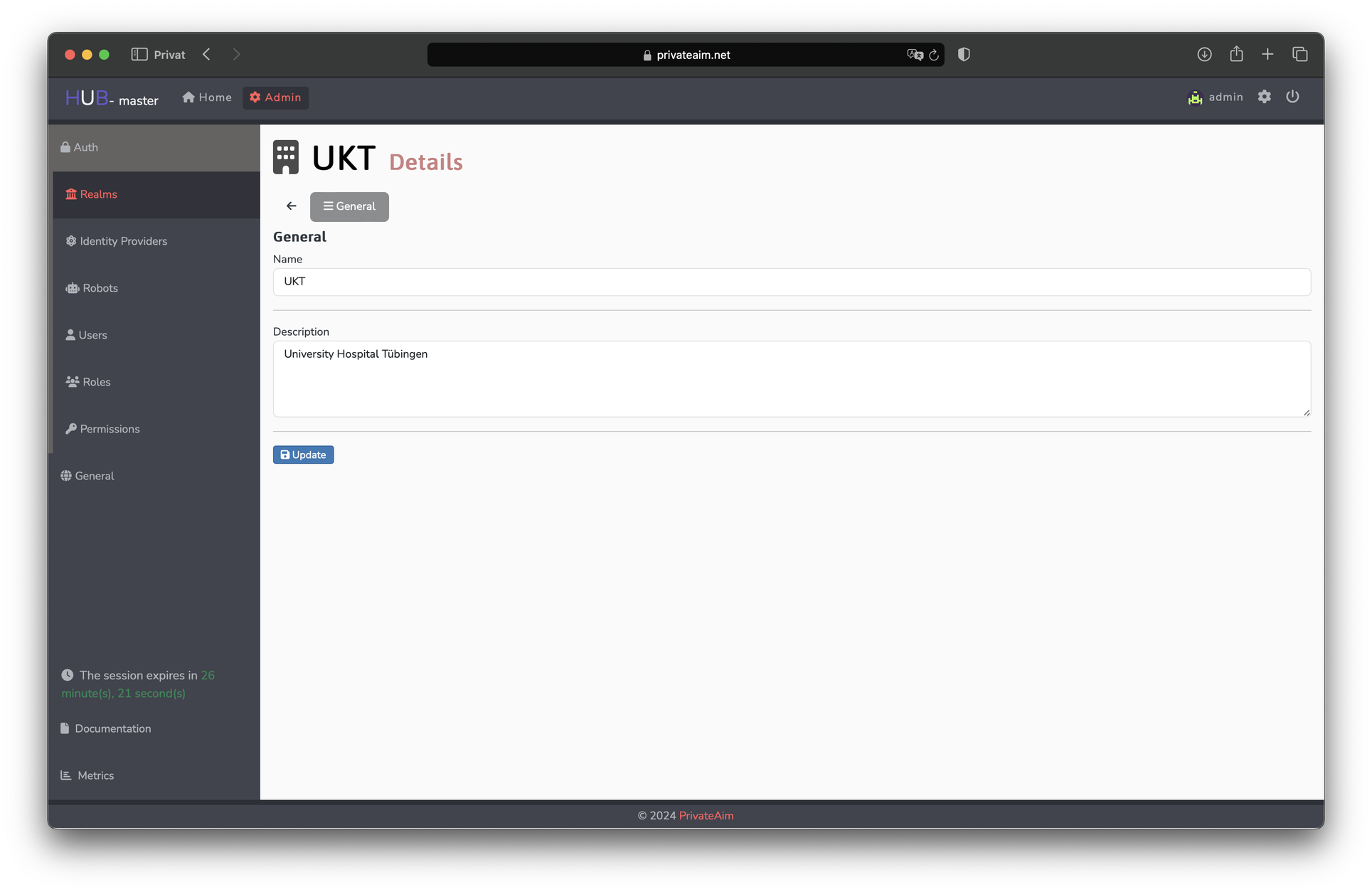
Realm Details
Realm Scoping
All realm-scoped entities carry a realmId property (the realm_id column). Access is enforced by the isRealmResourceWritable() helper in every entity service:
Master realm member  →  can read/write all resources
Other realm member   →  can only read/write own realm's resources
This applies to all CRUD operations — creating, reading, updating, and deleting entities.
Users
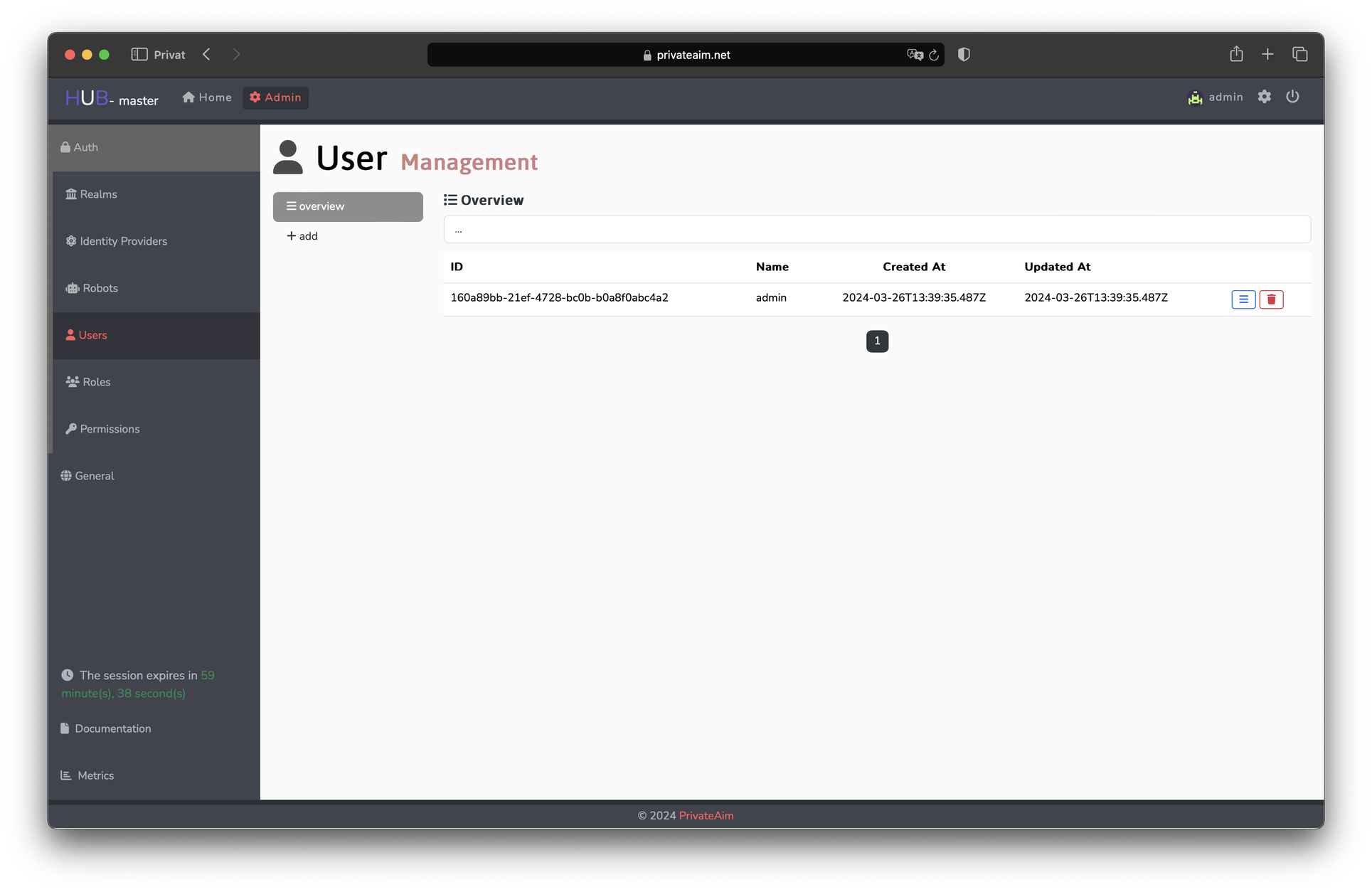
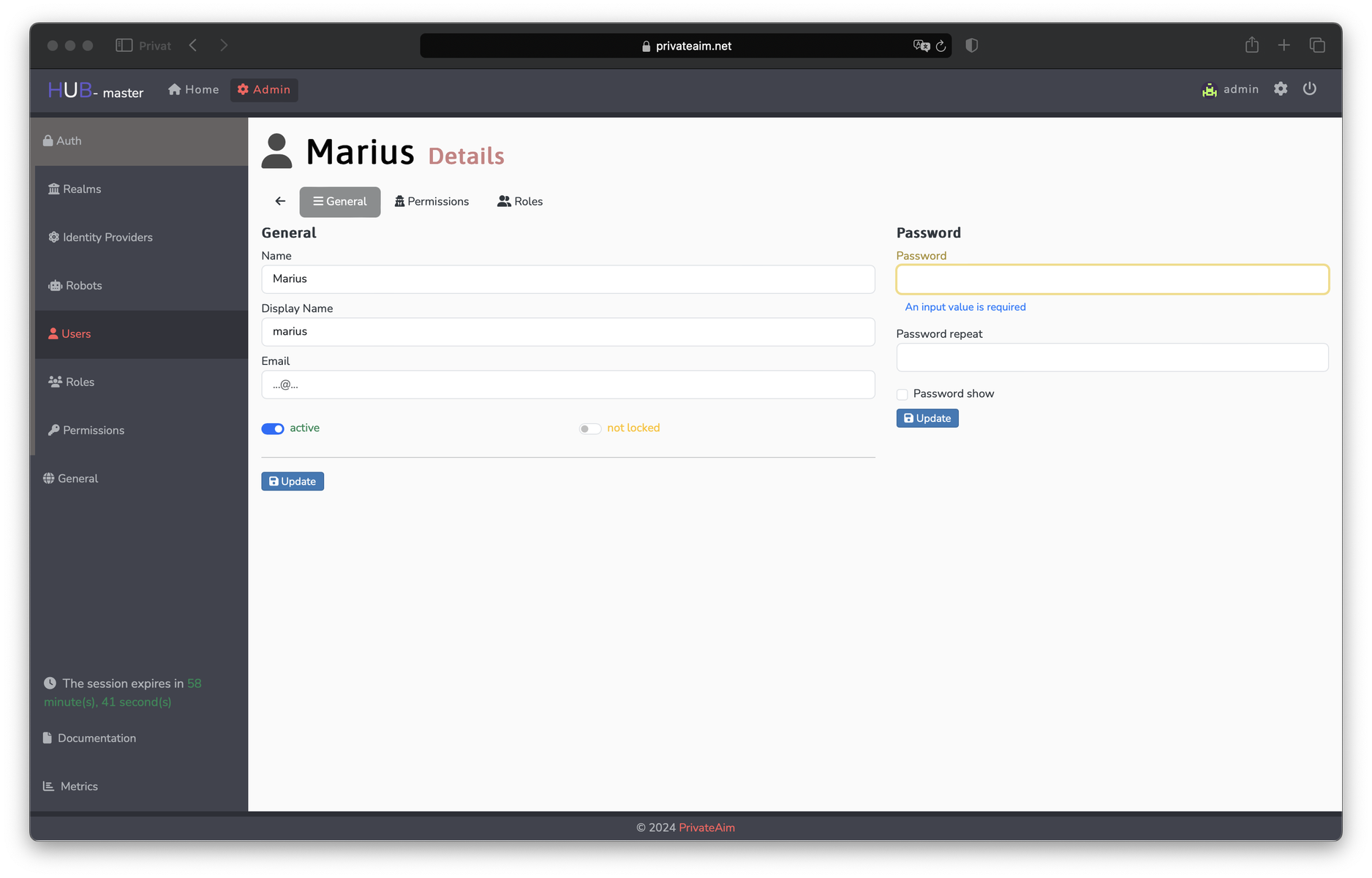
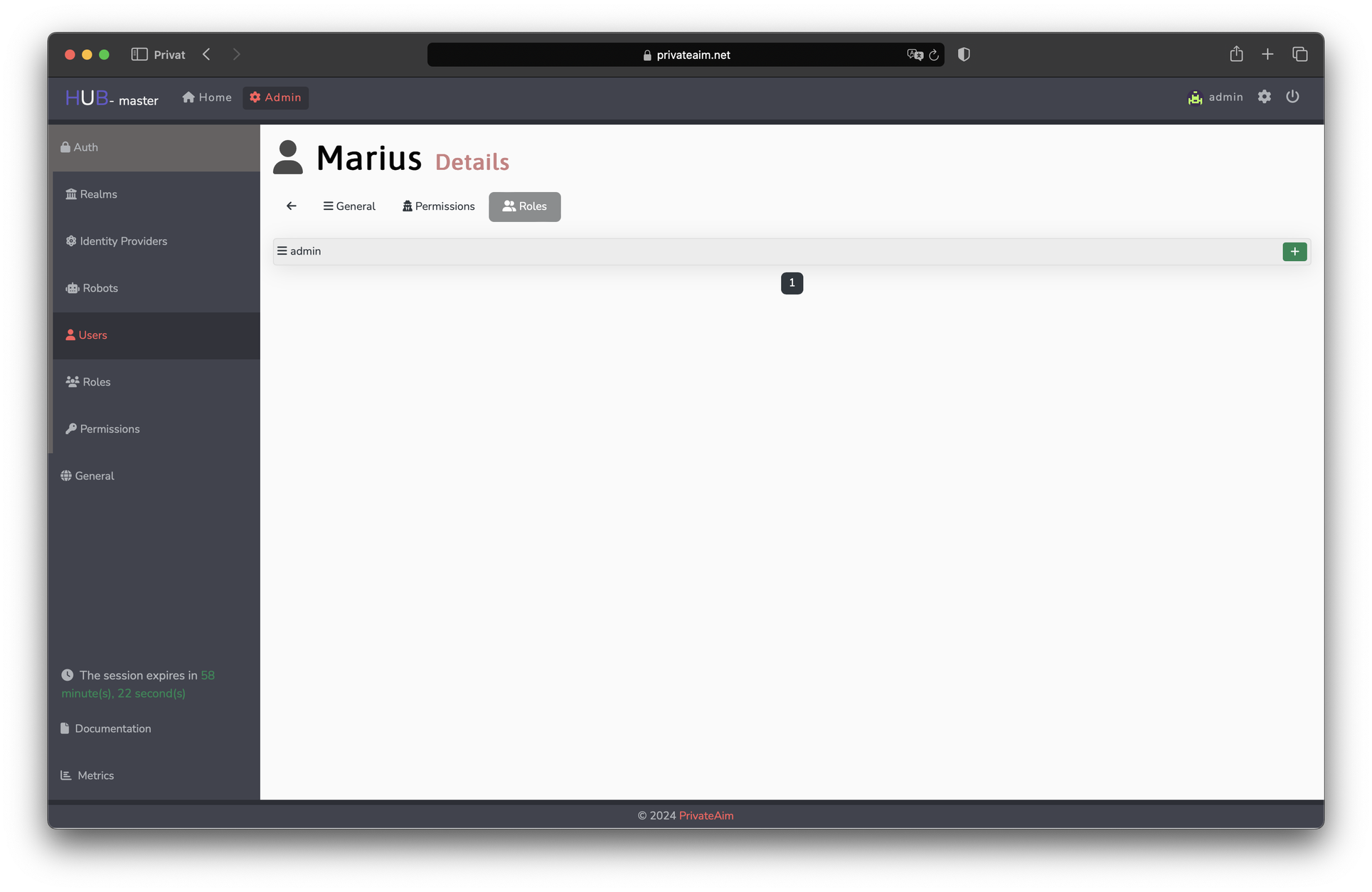
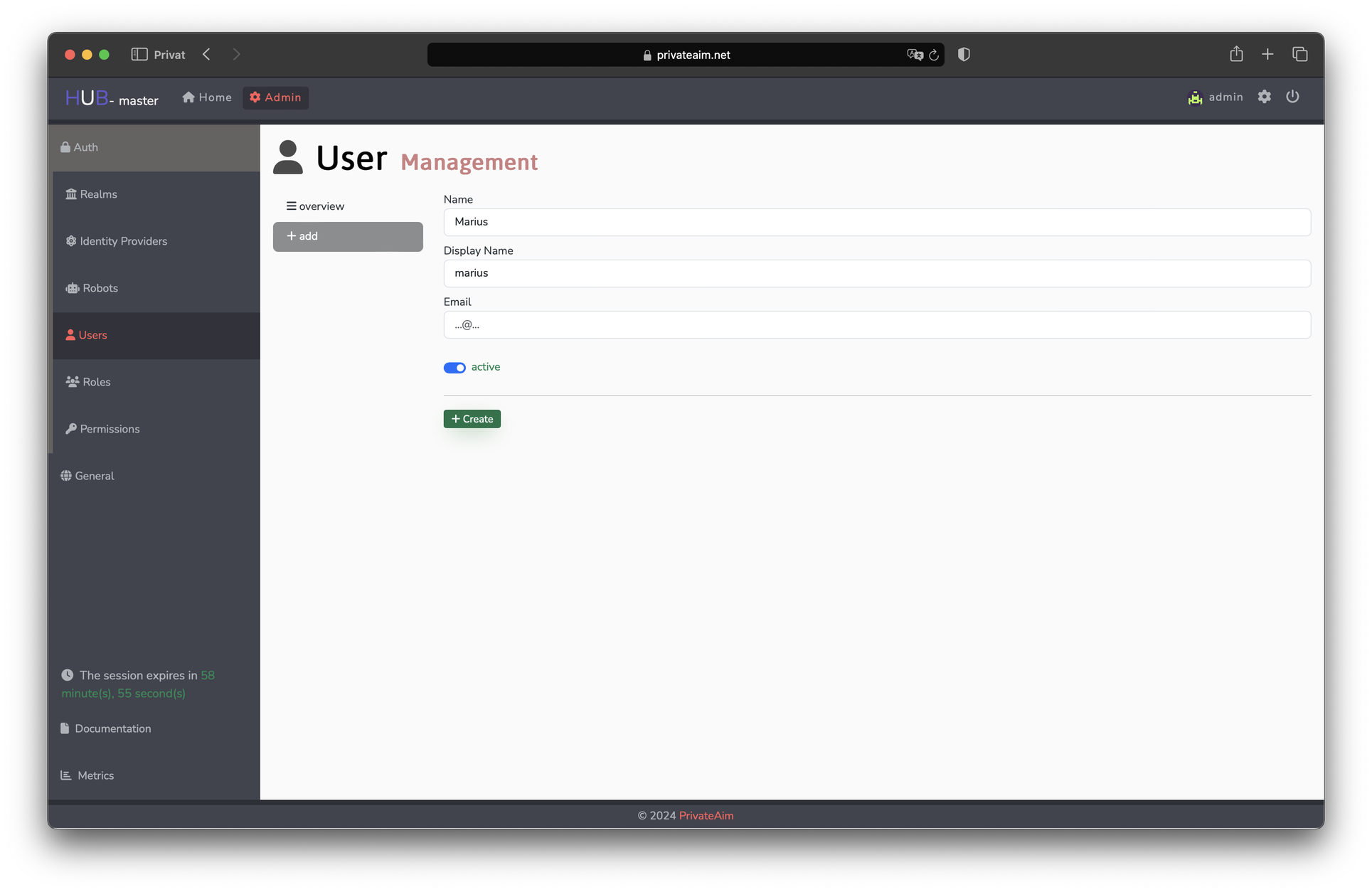
Users are human accounts within a realm. Administrators can manage users, assign roles, and view details.
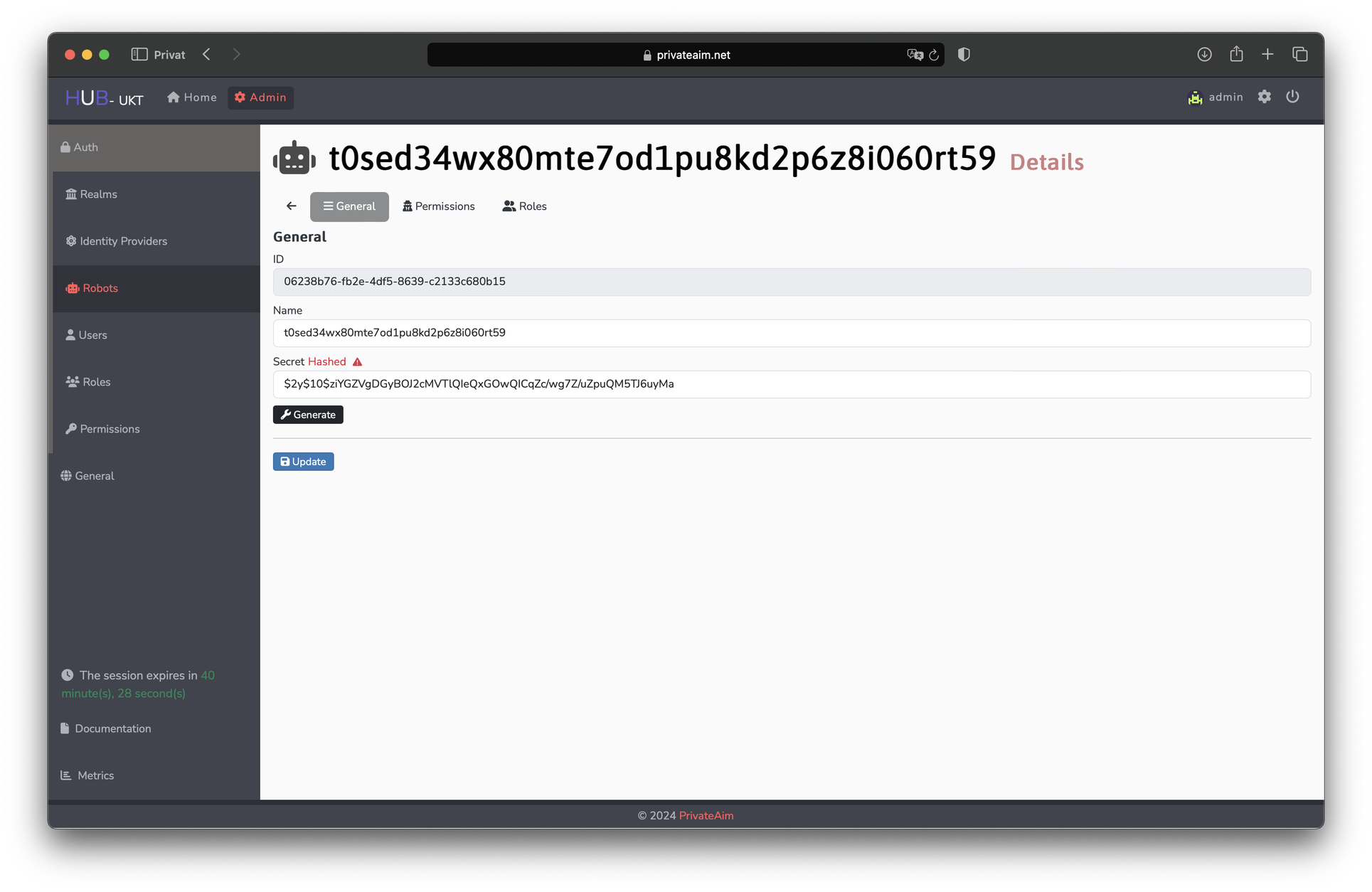
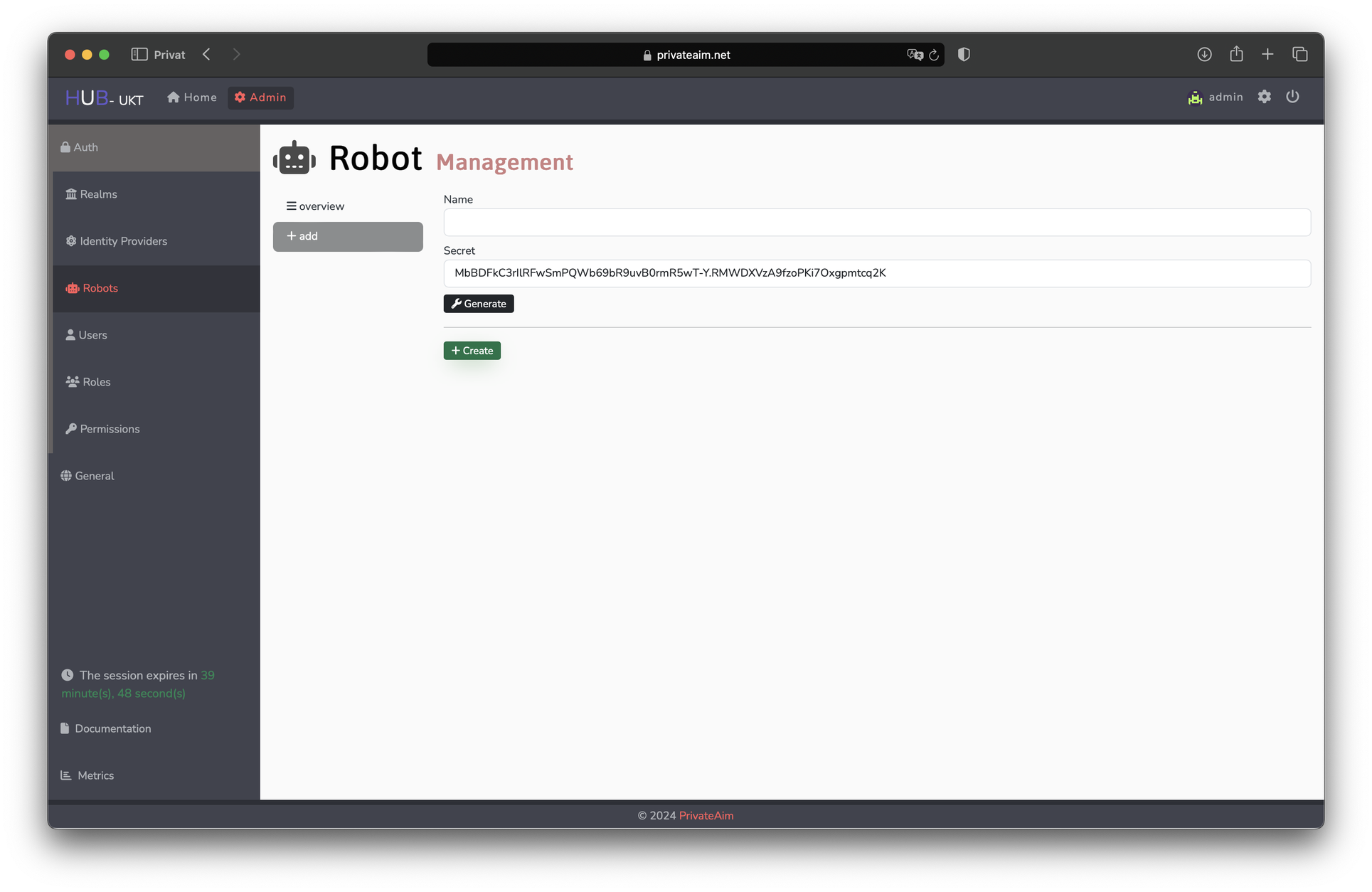
Robots
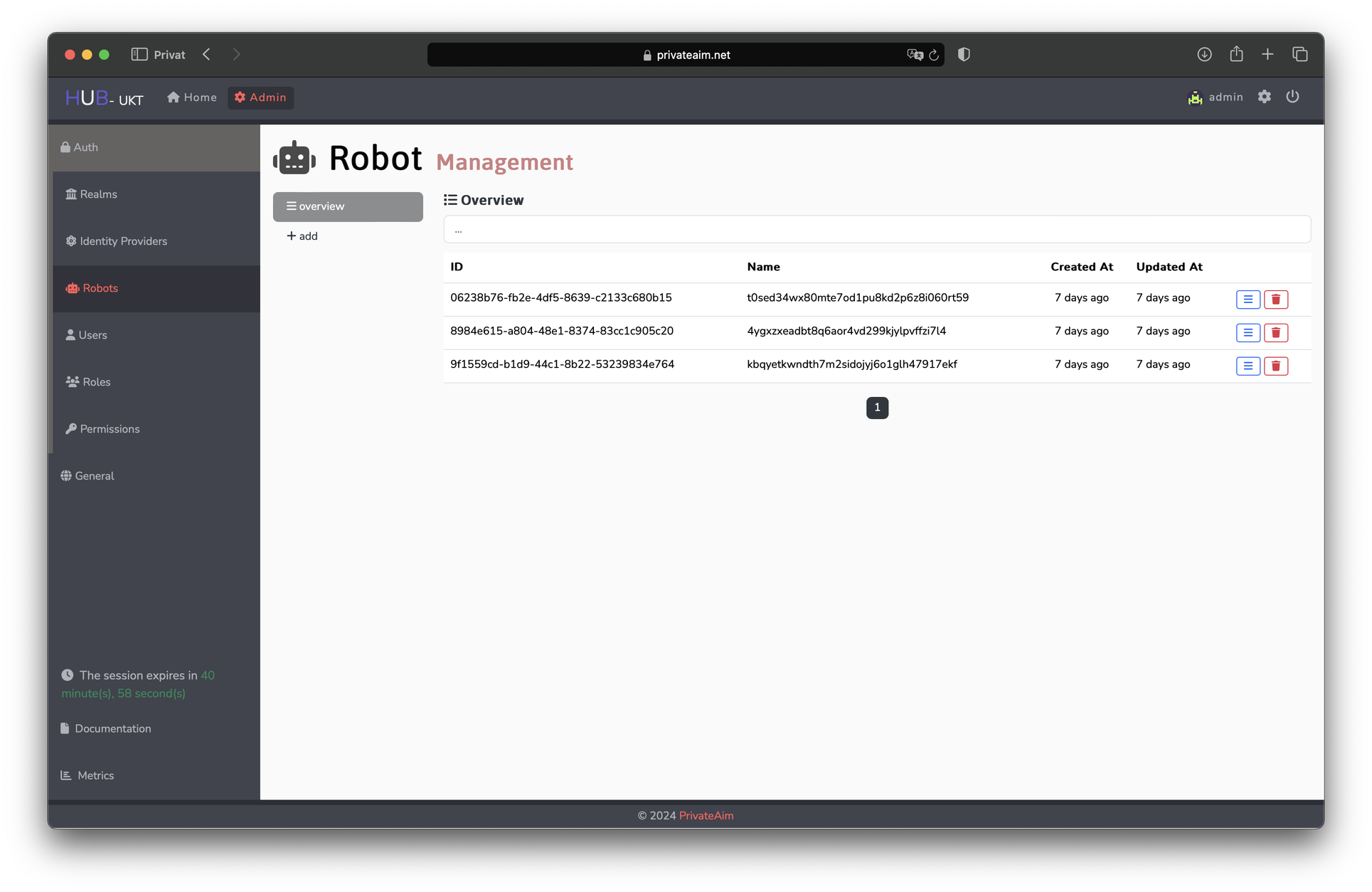
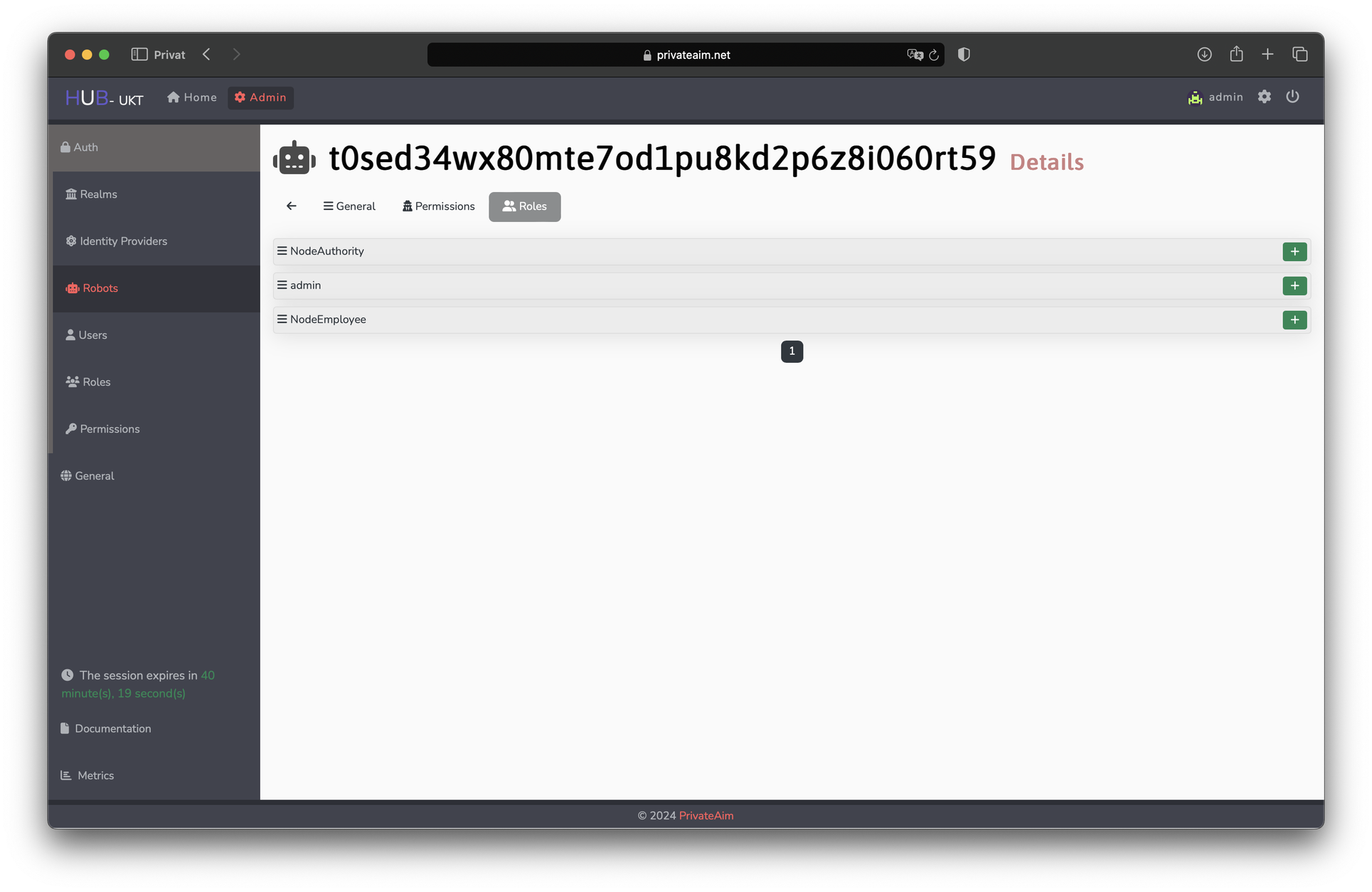
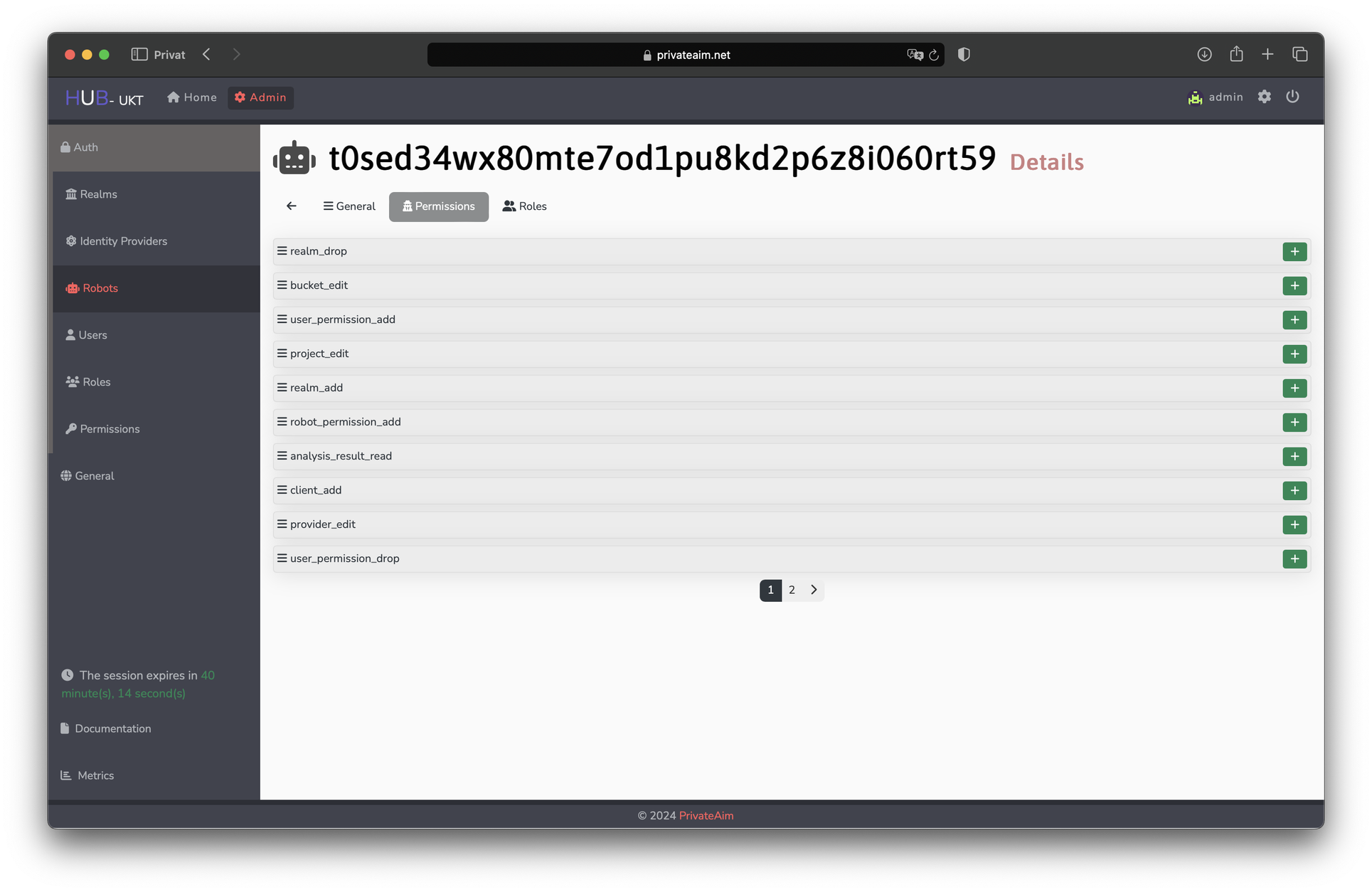
Robots are API pseudo-users for automation. They belong to a realm and are assigned roles and permissions just like human users.
Use robots for:
- Automated pipelines that interact with the Hub API
- Service-to-service communication
- CI/CD integrations
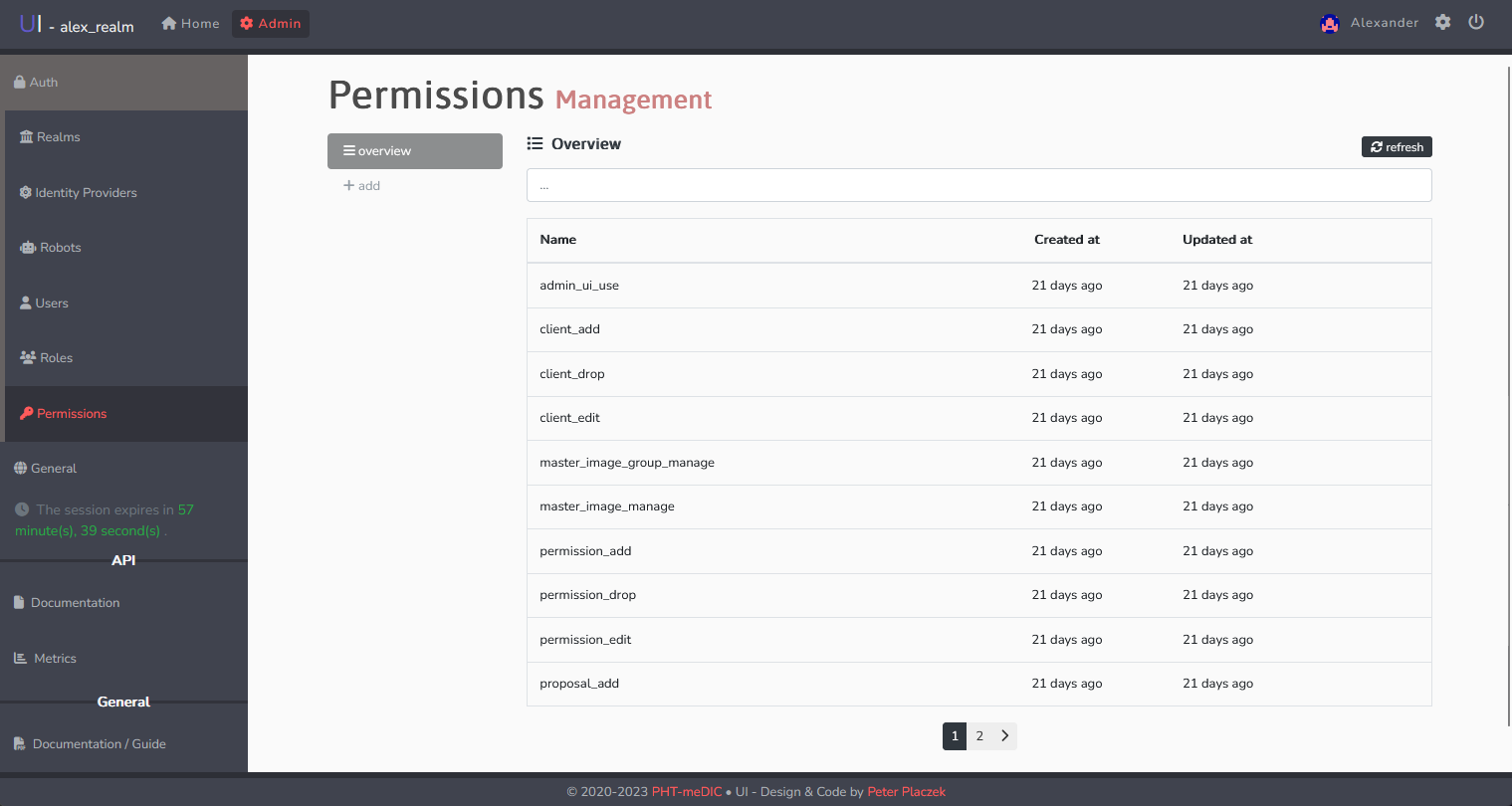
Roles & Permissions
Hub uses role-based access control (RBAC) via Authup:
- Roles group related permissions and are assigned to users or robots within a realm
- Permissions are pre-defined actions (e.g.,
node_create,analysis_update) checked at the service layer - Two-phase permission model:
preCheck(fast fail) thencheck(with policy attributes)
Identity Providers
Each realm can configure OIDC identity providers for federated authentication. Users authenticate through their realm's identity provider, and Authup maps the external identity to a Hub user.